Solar & DC protection
Solar PV Fuses & Holders
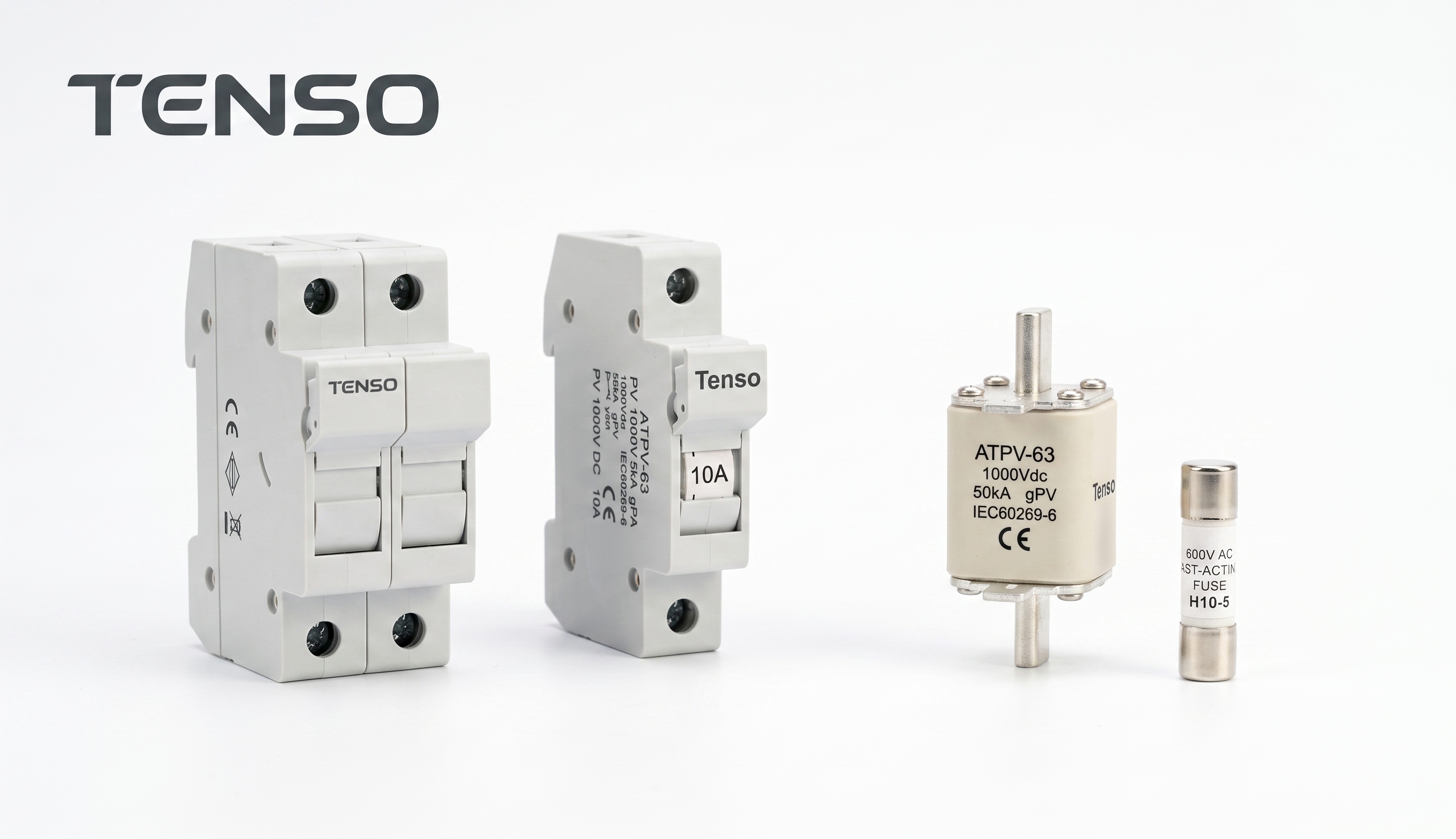
gPV-rated string protection for 1000 V and 1500 V DC arrays — cylindrical 10×38 mm and NH fuse-links, plus combiner-ready holders, built and tested in our own factory.
- gPV / DC duty for 1000 V & 1500 V arrays
- Sized to module Isc and max-series-fuse rating
- Combiner-box and inverter volume supply
- Samples for qualification and second-sourcing
CEULRoHSREACH
Product range
A complete range from one supplier
Every line below is engineered, built and tested in our own factory — so you can source a complete, matched range from a single manufacturer, with one set of documents.
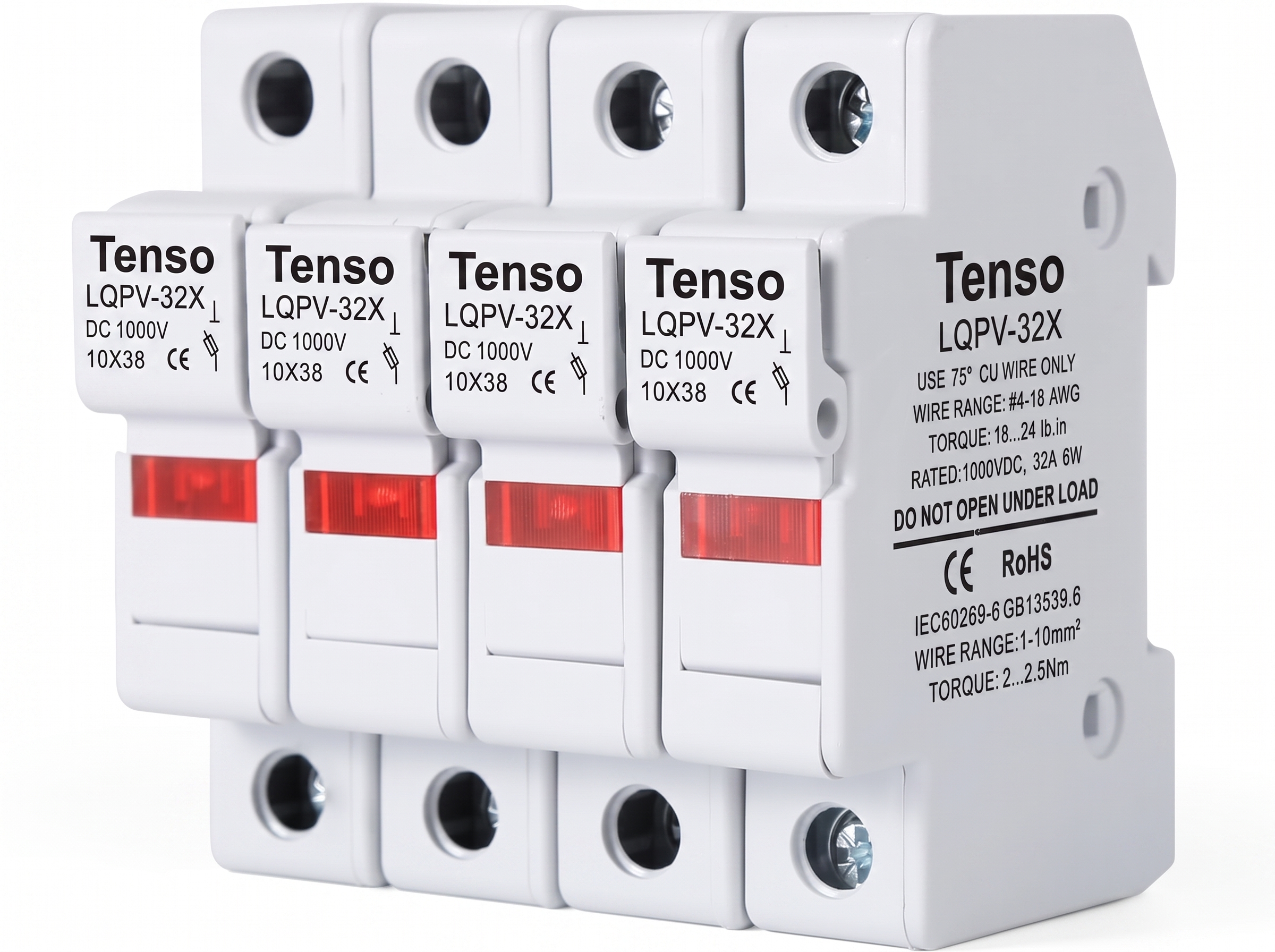
gPV Cylindrical Fuses (10×38)
String-level overcurrent and reverse-current protection for rooftop and utility arrays.
1–32 A1000 / 1500 V DC10×38 mm gPV
View range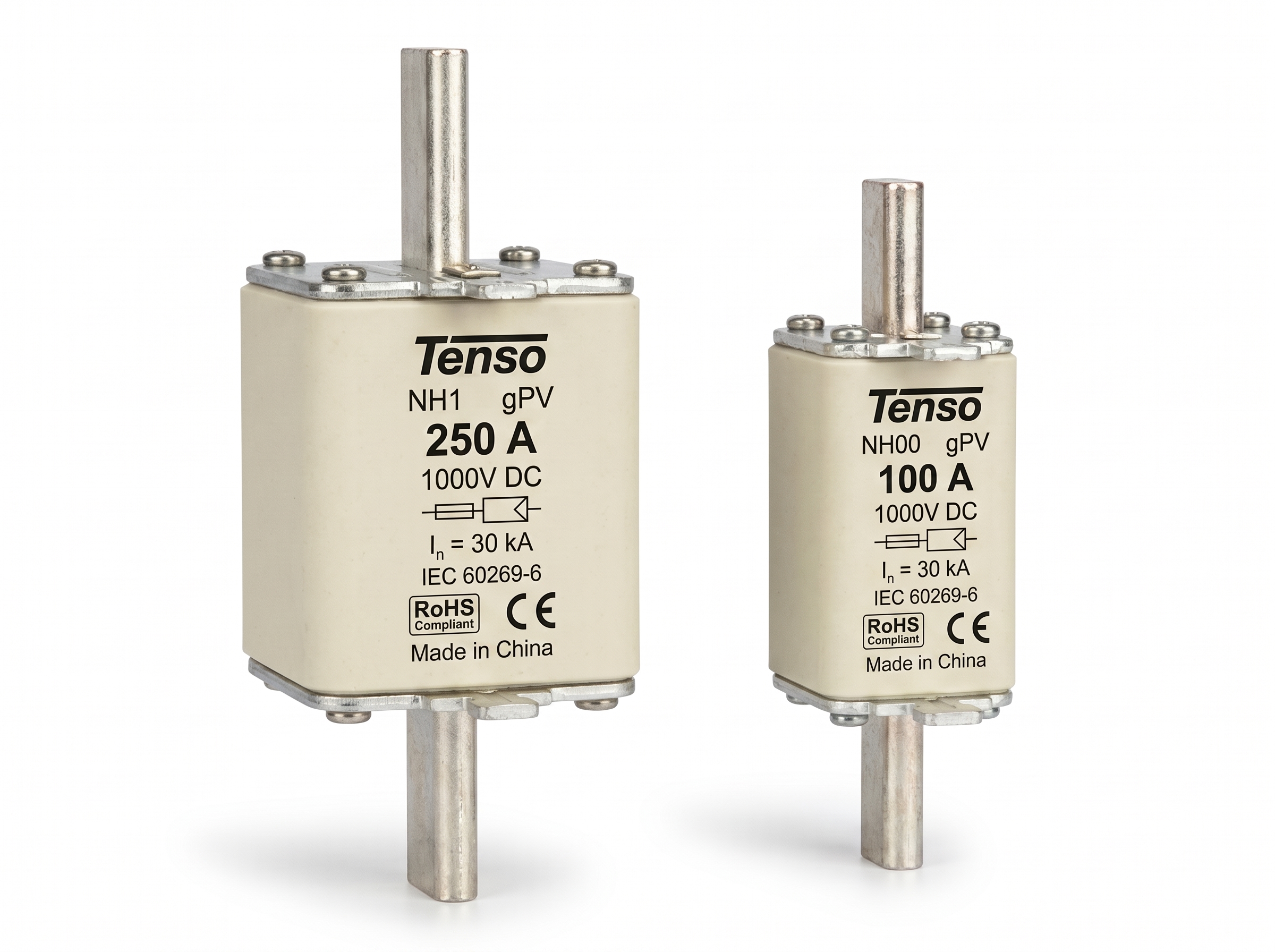
gPV NH Fuse-Links
Higher-current DC protection at array and sub-array level for utility combiners.
≤ 400 A1000 / 1500 V DCNH00–NH3 gPV
View range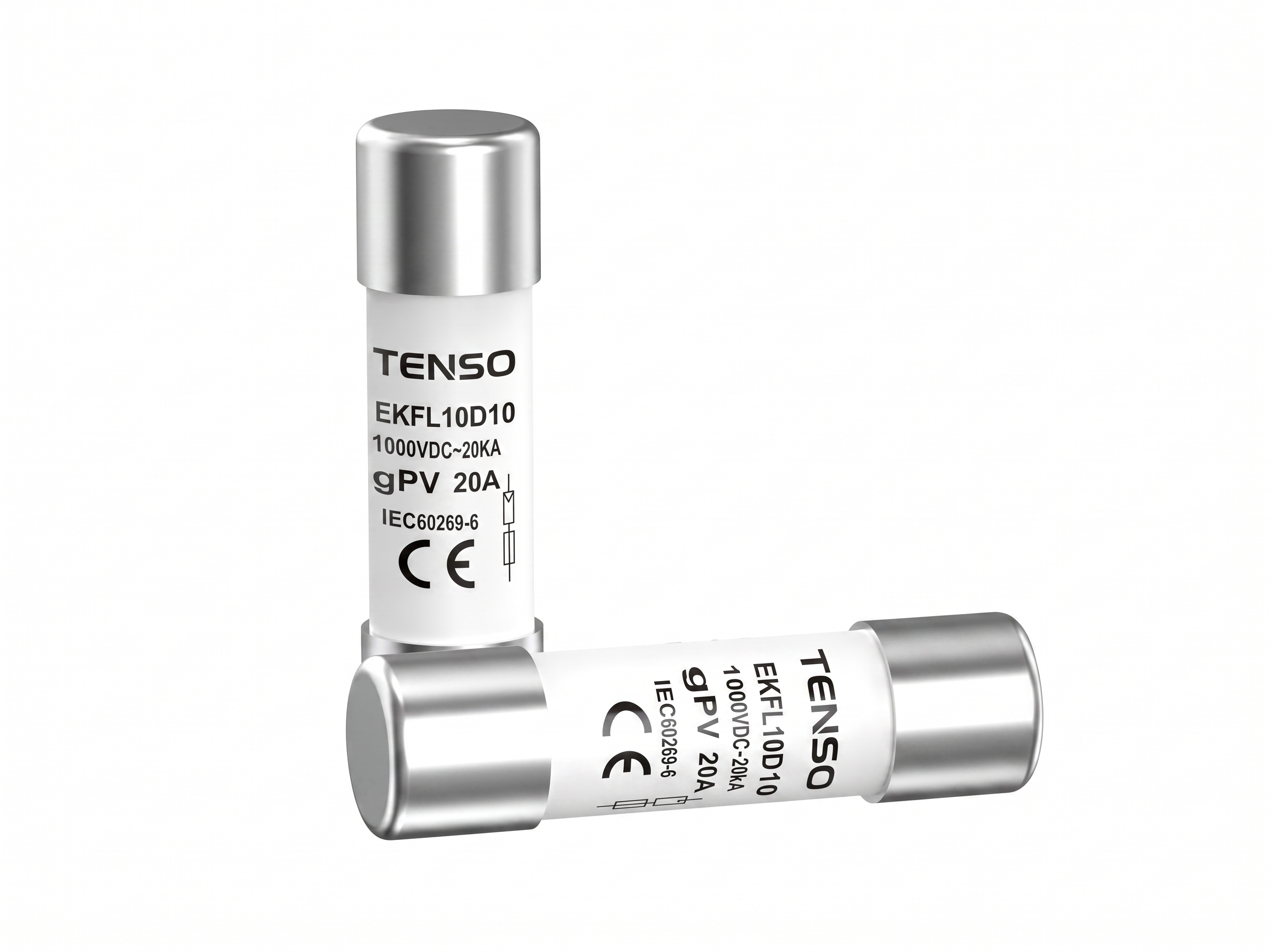
PV Fuse Holders & Bases
DIN-rail and combiner-box-ready holders for the gPV fuse, specified by voltage.
1000 / 1500 V DCDIN-railCombiner-ready
View rangeSpecifications & standards
Built and tested to standard
The headline ratings and the standards we build to. Full datasheets — with tolerances, time-current curves and dimensions — are available on request.
| Category | gPV (photovoltaic) |
|---|---|
| Voltage class | 1000 V / 1500 V DC |
| Current rating | 1 – 32 A (10×38) · ≤ 400 A (NH) |
| Standards | IEC 60269-6 · UL 248-19 |
| Format | 10×38 mm · NH00–NH3 |
| Sizing rule | ~1.5 × module Isc, ≤ max series fuse |
Standards & approvals
- IEC 60269-6 Fuse-links for photovoltaic systems (gPV)
- UL 248-19 Photovoltaic fuses — North America
- IEC 62548 PV array design — string-fusing requirements
Match the fuse's DC voltage rating to the array's maximum system voltage. Size to roughly 1.5× the module's short-circuit current (Isc), and never above the module's maximum series fuse rating on its datasheet.
Choosing a solar PV fuse: 1000V vs 1500VFor solar buyers, two things get checked before anything else: the DC voltage class and the agency approval. A photovoltaic string is a DC circuit, and DC is unforgiving — a fuse rated below the array’s system voltage, or rated only for AC, may not safely interrupt a fault. Tenso manufactures gPV-category fuse-links and the holders that carry them, built for DC duty in 1000 V and 1500 V arrays, with QC on every batch before it ships.
The complete DC string-protection range
The line covers gPV cylindrical fuses in the common 10×38 mm format for string-level overcurrent and reverse-current protection; higher-current gPV NH fuse-links for array and sub-array level in utility combiners and recombiners; and DIN-rail, combiner-box-ready holders specified by voltage class. For DC isolation and array disconnection — switching rather than overcurrent — pair them with our disconnect switches.
Do you even need string fuses?
When several strings are paralleled, a fault in one string can be back-fed by the others. Once the number of parallel strings exceeds the code threshold (typically three or more), that reverse current can exceed the module’s and cable’s rating, so string fuses are required. Size to roughly 1.5× the module’s short-circuit current (Isc), keep at or below the module’s maximum series fuse rating, and confirm against the module datasheet and your local code. Smaller arrays may not need string fuses at all — tell us your layout and we will confirm.
Why DC needs DC-rated (gPV) parts
A DC arc has no natural current zero to help it extinguish, so an AC-rated fuse may not safely interrupt a DC fault in a PV string. Always specify gPV, DC-rated fuses and holders for the array’s voltage class.
Why source from Tenso
You're buying from the factory
No trading-company markup and no telephone game with a sub-supplier — design, tooling, production and QC all sit under one roof.
DC-rated, not adapted
gPV fuse-links built for DC duty in PV arrays — not an AC part pressed into service that can't safely clear a DC fault.
Both voltage classes
1000 V and 1500 V DC ranges, so the fuse always matches the array's maximum system voltage.
Combiner & inverter volume
Volume gPV fuses and holders for combiner, recombiner and inverter builds, with private-label options.
We size it with you
Send the module Isc and string layout — our engineers confirm rating, voltage class and whether you need string fuses at all.
Applications
Where these parts go to work
Rooftop & commercial PV
Residential and C&I strings
Utility-scale solar
Combiner and recombiner boxes
Energy storage (BESS)
Battery DC protection
See solutionsOff-grid & telecom DC
Hybrid DC systems
See solutionsCertified
Compliance you can hand to your QA team
Built to the standards your market and your auditors expect — with certificates and declarations available on request.
Conformity for the European market across applicable PV ranges.
UL recognition/listing on qualifying photovoltaic fuse ranges.
Restricted-substance compliance for the supply chain.
Substance-of-concern declarations available on request.
Cross-reference
Switching from another brand?
Replacing an existing PV fuse? Send the reference and we'll confirm a gPV equivalent at the right voltage class.
| Type | Voltage class | Tenso equivalent | Rating |
|---|---|---|---|
| gPV 10×38 | 1000 V DC | TS-PV10 series | 1–30 A |
| gPV 10×38 | 1500 V DC | TS-PV15 series | 1–32 A |
| gPV NH | 1000/1500 V DC | TS-PVNH series | ≤ 400 A |
How to order
From enquiry to delivery
- 01
Enquiry
Send the array voltage class, module Isc and string layout. We confirm whether string fuses are needed and at what rating.
- 02
Samples
Approve samples for qualification against your combiner or inverter design.
- 03
Quote & terms
Pricing, MOQ, lead time and Incoterms in one clear quote.
- 04
Production
Manufactured and assembled in-house to the approved gPV sample.
- 05
QC & shipping
Batch-inspected, then packed and shipped with documentation to your port.
Request a quote
Tell us what you need protected.
Send a part number, a drawing, or a description of the circuit. We confirm fit and pricing within one business day.
- Email sales@tensofuse.com
- WhatsApp Chat with sales
FAQ
Solar & DC protection — questions buyers ask
Do I need fuses for my solar panels?
Usually once three or more strings are paralleled, because reverse fault current can then exceed a module's rating. Smaller arrays may not require them — confirm against your applicable code.
What size fuse do I need for a solar string?
About 1.5× the module's short-circuit current (Isc), and no higher than the module's maximum series fuse rating — check the module datasheet and code.
1000 V or 1500 V DC — which fuse?
Match the fuse's DC voltage rating to the array's maximum system voltage class. A 1000 V fuse must not be used on a 1500 V array.
Can I use a regular or AC fuse on a solar DC circuit?
No. Solar strings are DC and need gPV, DC-rated fuses; an AC fuse may not safely interrupt a DC PV fault.
What is a gPV fuse?
A full-range fuse-link designed for photovoltaic systems under IEC 60269-6 — it protects strings against both overcurrent and reverse current.