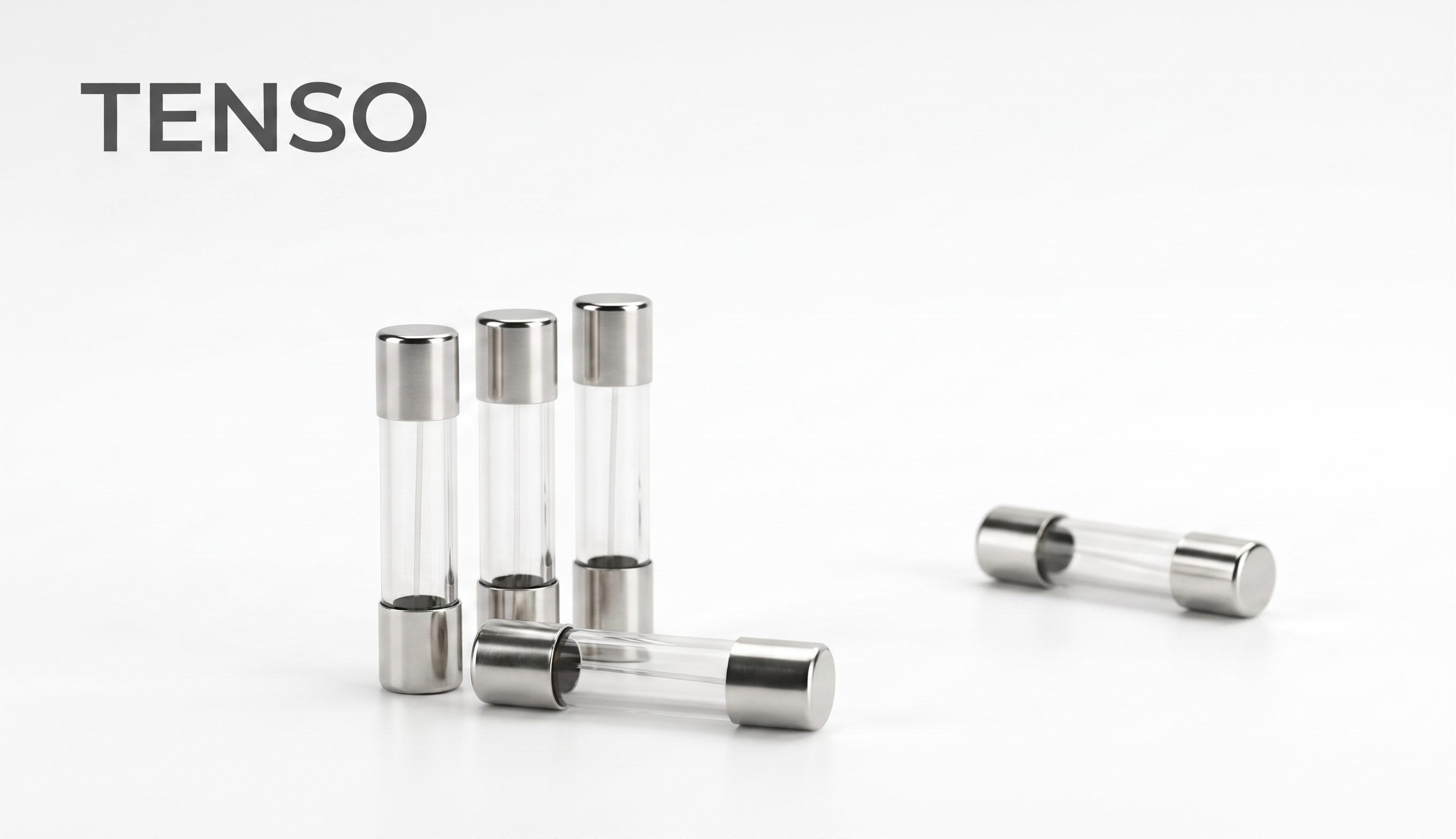
Electronics & equipment protection
Cartridge & Glass Fuses
5×20 mm and 6×30 mm cartridge fuses in glass and ceramic bodies, fast-blow and time-lag — for electronics, appliances and equipment, built and tested in our own factory.
- Glass for visibility, ceramic for breaking capacity
- Fast-blow (F), medium (M) and time-lag (T)
- Built to IEC 60127-2 and UL 248-14
- Samples for qualification and second-sourcing
CEULRoHSREACH
Product range
A complete range from one supplier
Every line below is engineered, built and tested in our own factory — so you can source a complete, matched range from a single manufacturer, with one set of documents.
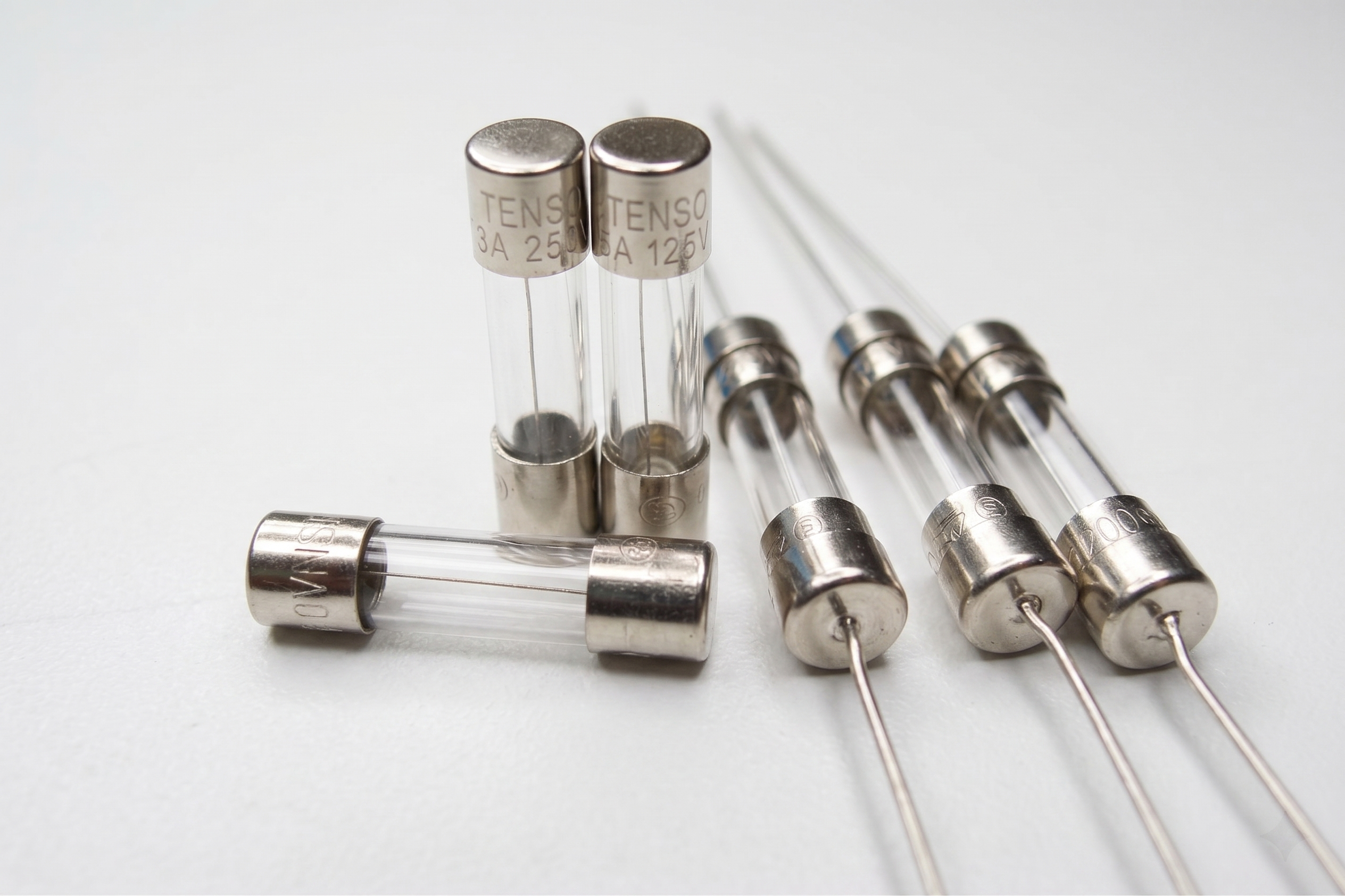
Glass Tube Fuses (5×20mm)
See a blown element at a glance — for low fault-current electronics, instruments and low-power circuits.
5×20 mm≤ 250 VF / T
View range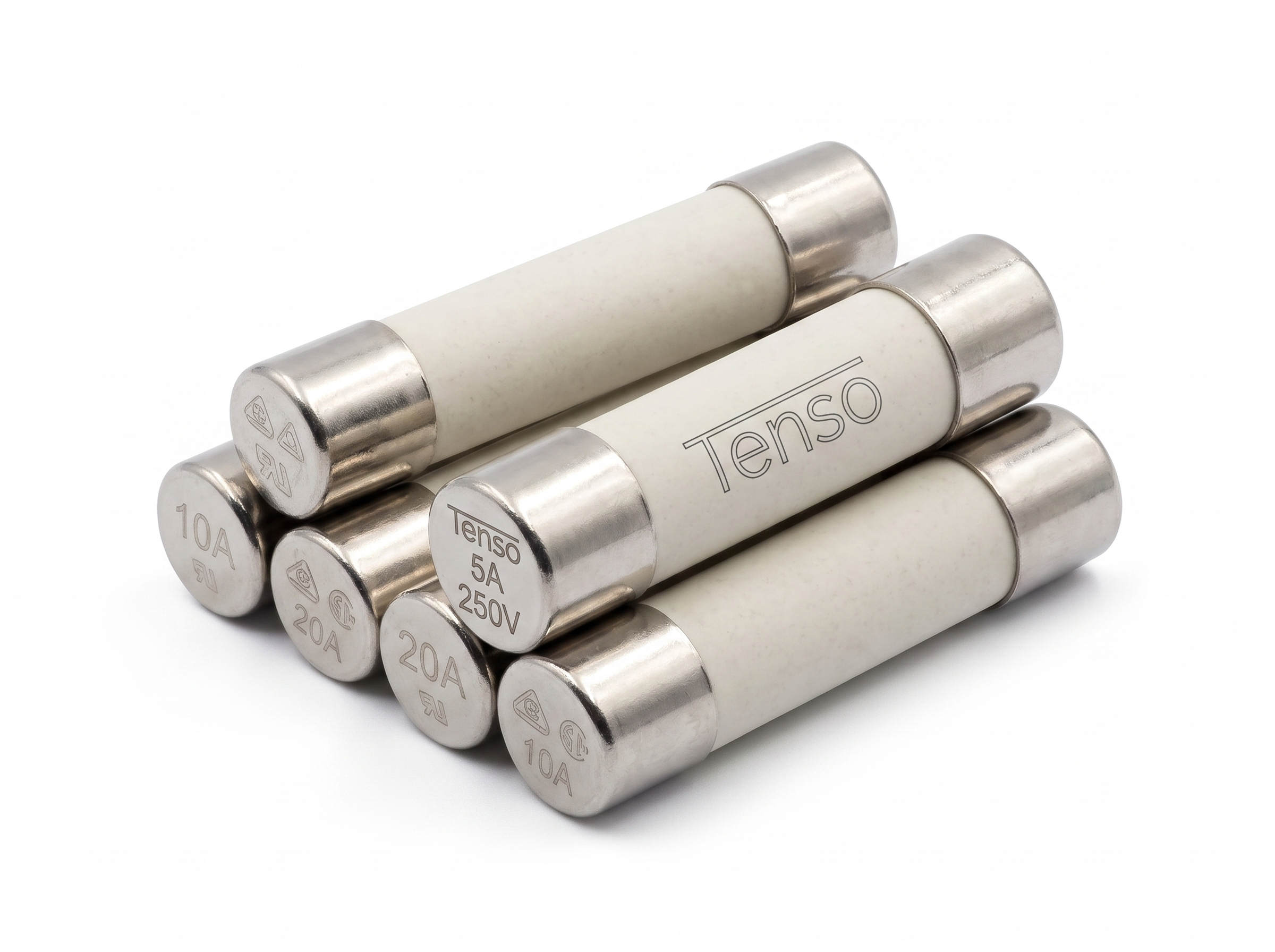
Ceramic Fuses (High-Breaking)
Higher breaking capacity for higher fault-current appliances and power supplies.
5×20 · 6×30High-breakingF / M / T
View rangeSpecifications & standards
Built and tested to standard
The headline ratings and the standards we build to. Full datasheets — with tolerances, time-current curves and dimensions — are available on request.
| Body sizes | 5×20 · 6×30 · 6.3×32 mm |
|---|---|
| Bodies | Glass · ceramic (high-breaking) |
| Speed | F (fast) · M (medium) · T (time-lag) |
| Voltage | Up to 250 V AC (+ low-V variants) |
| Standards | IEC 60127-2 · UL 248-14 |
| Current rating | Common 32 mA – 20 A |
Standards & approvals
- IEC 60127-2 Miniature cartridge fuse-links (F / M / T classes)
- UL 248-14 Supplemental fuses — North America
- RoHS / REACH Restricted-substance compliance
Two decisions cause most nuisance trips and failures: speed (fast-blow for sensitive electronics, time-lag for inrush loads) and breaking capacity (glass for low fault-current, ceramic for high). Never drop below the circuit's prospective fault current.
Complete guide to fuse typesMost “fuse keeps blowing the moment I switch on” complaints in electronics and appliances come down to two choices made wrong: the speed and the breaking capacity. Tenso manufactures the full range of cartridge fuses — 5×20 mm and 6×30 mm, glass and ceramic, fast-blow and time-lag — built to IEC 60127-2 and UL 248-14 so the part passes your agency approvals, with QC on every batch.
Glass or ceramic — it’s about breaking capacity
A glass body lets you see a blown element at a glance and is fine for low fault-current electronics. A ceramic body — often sand-filled — gives a much higher breaking capacity for higher fault-current circuits such as appliances and power supplies. The rule is simple: never drop below the circuit’s prospective fault current. You can step a glass fuse up to ceramic of the same size, current and voltage; don’t go the other way.
Fast-blow or time-lag
A fast-blow (F) fuse clears quickly and suits sensitive electronics with no inrush. A time-lag (T) fuse deliberately rides through the brief inrush of motors, transformers and capacitor-input power supplies. If a fuse blows the instant you power up but the circuit is healthy, you likely need a time-lag — not a bigger fuse. Tell us the load behaviour and we’ll match the speed class.
When a cartridge fuse isn’t the right format
For automotive-style circuits use a blade fuse; for board-level protection a PCB holder or clip; and for higher-power or high-fault-current circuits step up to industrial & HRC fuses.
Why source from Tenso
You're buying from the factory
No trading-company markup and no telephone game with a sub-supplier — design, tooling, production and QC all sit under one roof.
Glass or ceramic
Glass to see a blown element in low fault-current circuits; high-breaking ceramic where the fault current is higher — both from one supplier.
Speed matched to load
Fast-blow (F) for no-inrush electronics, time-lag (T) for motors, transformers and capacitive supplies, with M in between.
Agency-ready
Built to IEC 60127-2 and UL 248-14 so your product passes its agency approvals.
OEM & volume
High-volume supply with private-label options for electronics and appliance builds.
Applications
Where these parts go to work
Consumer electronics
Boards, adapters, chargers
Appliances & white goods
Mains-side protection
Power supplies
Capacitor-input, time-lag
Instruments & medical
Test and IT equipment
Certified
Compliance you can hand to your QA team
Built to the standards your market and your auditors expect — with certificates and declarations available on request.
Conformity for the European market across applicable ranges.
UL recognition/listing on qualifying cartridge ranges.
Restricted-substance compliance for electronics supply chains.
Substance-of-concern declarations available on request.
Cross-reference
Switching from another brand?
Replacing an existing cartridge fuse? Send the size, rating and speed and we'll confirm the Tenso equivalent.
| Size | Body | Tenso equivalent | Speed |
|---|---|---|---|
| 5×20 mm | Glass | TC-G520 series | F / T |
| 5×20 mm | Ceramic | TC-C520 series | F / M / T |
| 6×30 mm | Ceramic | TC-C630 series | F / T |
How to order
From enquiry to delivery
- 01
Enquiry
Send the size, rated current, voltage, speed and breaking capacity. We confirm fit — usually same day.
- 02
Samples
Approve samples for qualification before a run.
- 03
Quote & terms
Pricing, MOQ, lead time and Incoterms in one clear quote.
- 04
Production
Manufactured and assembled in-house to the approved sample.
- 05
QC & shipping
Batch-inspected, then packed and shipped with documentation to your port.
Request a quote
Tell us what you need protected.
Send a part number, a drawing, or a description of the circuit. We confirm fit and pricing within one business day.
- Email sales@tensofuse.com
- WhatsApp Chat with sales
FAQ
Electronics & equipment protection — questions buyers ask
What's the difference between fast-blow and slow-blow?
A fast-blow (F) fuse clears quickly for sensitive, no-inrush circuits. A slow-blow / time-lag (T) fuse rides through brief start-up inrush, so it won't nuisance-trip on motors, transformers or capacitive power supplies.
Glass or ceramic — which fuse?
Glass lets you see a blown element and suits low fault-current electronics; ceramic gives a higher breaking capacity for higher fault-current circuits.
What size is a 5×20 or 6×30 fuse?
Those are the body dimensions in millimetres (5 mm × 20 mm, 6 mm × 30 mm). The size must match your holder or clip; 6.3×32 mm is the imperial (1/4″) equivalent.
What does F, M or T mean on a fuse?
They're the IEC 60127 speed classes — F is fast-acting, T is time-lag (slow-blow), and M is medium.
Can I replace a glass fuse with a ceramic one?
Yes, if the size, current and voltage match — a ceramic body simply adds breaking capacity. Don't go the other way and drop below the circuit's fault level.