How-tos
How to Replace a Blown Fuse Safely
Replacing a fuse safely means matching the exact rating, de-energising first, and stopping if the new fuse blows again — never upsizing or bypassing.
On this page
The Problem: The Danger Is in “Safely”
Swapping a fuse looks like nothing — pop the old one out, push a new one in. The word that matters is safely, and that’s where people get hurt or start fires.
Two mistakes cause almost all the harm. The first is working the circuit live — reaching into a powered panel invites a shock or an arc. The second, and the one that burns houses down, is fitting the wrong replacement, especially a higher amp rating. A fuse is sized to protect the wiring; put in a bigger one so it “stops blowing,” and you’ve told the system it’s fine to push more current than the wires can safely carry. The wire, not the fuse, becomes the weak link — and it can overheat and ignite.
There’s a third, quieter trap: a fuse that blew is a symptom. Fuses rarely fail on their own, so replacing one without asking why it blew often just blows the new one too. Safe replacement therefore comes down to three habits: de-energize first, match the fuse exactly, and know when to stop and call a professional. (One quick check before anything else: confirm you actually have fuses. Round screw-in fuses with a glass window, or cartridge cylinders in a pull-out block, are fuses; a row of switches is a breaker panel — those you simply reset.)
How to Replace a Blown Fuse, Step by Step
Step 1 — Kill the load, then the main. Turn off and unplug the lights and appliances on the affected circuit first — otherwise the same load can blow the new fuse the instant you install it. Then switch off the main power at the panel. Work on a dry surface with a flashlight (the power’s off), wearing rubber-soled shoes or insulated gloves. Never work near water.
Step 2 — Find the blown fuse. Use the panel’s circuit map or label, or the simple clue of which area lost power. Look for a plug fuse with a darkened window or broken element, or a cloudy, scorched center. If you can’t tell by sight — which is common with cartridge fuses, since the element is hidden — confirm it with a multimeter or continuity tester (see how to test a fuse). Handle glass fuses by the casing, not the glass.
Step 3 — Get the exact replacement. Read the rating on the blown fuse and match it precisely: same amp rating, voltage, type, and speed (common household ratings are 15A, 20A, and 30A). Take the old fuse to the hardware store if you’re unsure, and see how to read a fuse and fuse sizing for the markings.
- Never install a higher-amp fuse — it defeats the protection and is a fire hazard.
- Never fit a lower voltage rating, and never put anything but a proper fuse in the holder — no foil, no coins.
- Note that standard plug fuses all share the same base, so it’s physically possible to install the wrong amperage; read the number, and consider Type-S (rejection-base) fuses that only accept the correct rating.
Step 4 — Fit the new fuse (by type).
- Plug / screw-in (Edison base): unscrew the old one counterclockwise, thread the new one in clockwise until hand-tight — snug, not overtightened. No tools needed.
- Cartridge (in a pull-out block): with the main off, pull the block straight out by its handle, remove the old cartridge with a fuse puller (not pliers, which can slip), seat the new cartridge, and slide the block firmly back in.
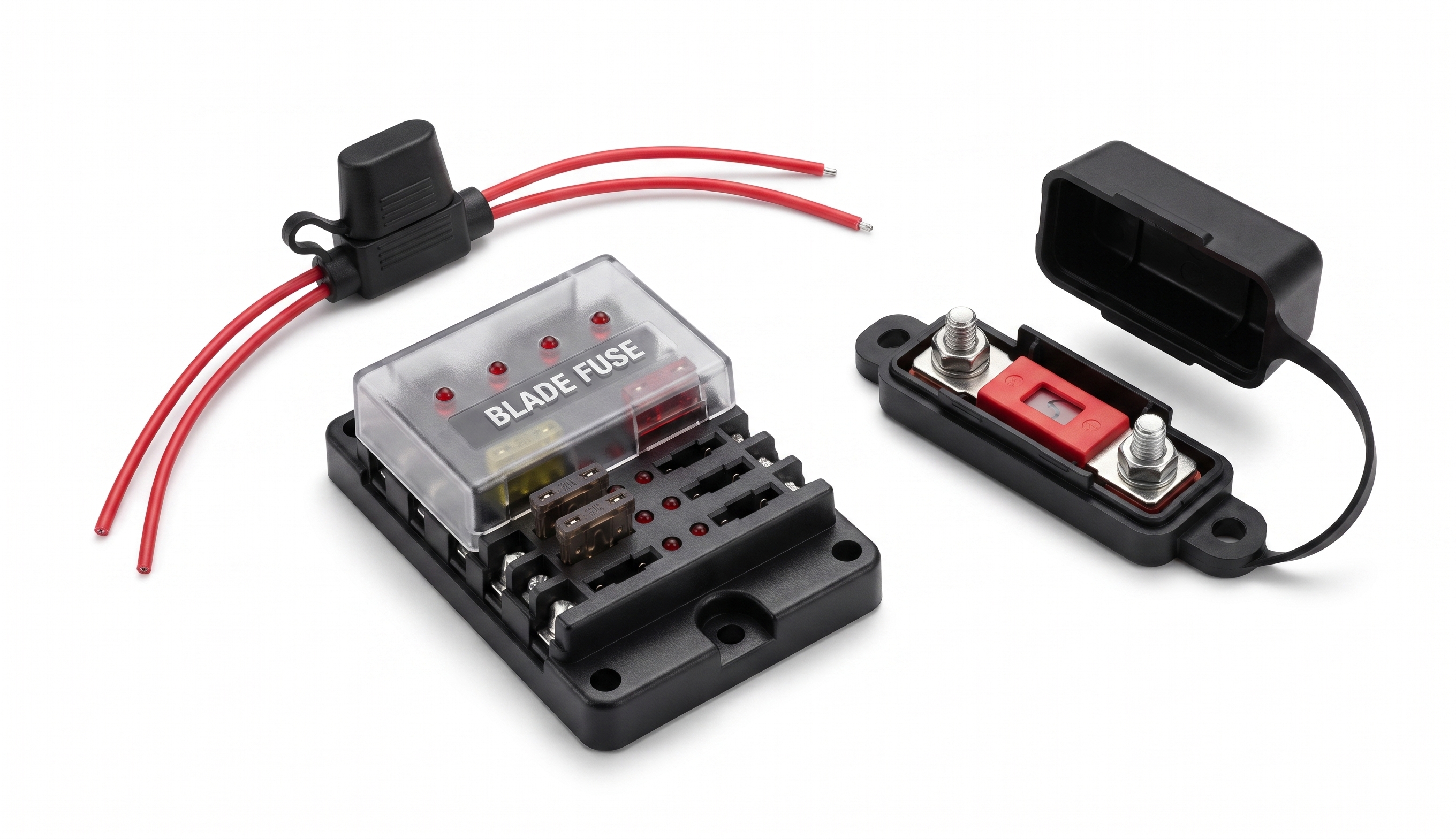
- Automotive blade: switch the ignition off (disconnect the battery’s ground terminal for always-live circuits), pull the blade fuse with a puller, and push in a new one of the same rating and color.
Step 5 — Restore power and test. Turn the main back on (or reinsert the block) and check that the affected lights and outlets work. Then turn your appliances back on one at a time. If the fuse blows when a particular device comes on, that device is overloading the circuit or is faulty — remove it and try again.
Step 6 — If the new fuse blows immediately, stop. An instant re-blow points to a short circuit, ground fault, or a failing device, not a bad fuse. Don’t keep replacing fuses, and never upsize — move to the next section.
When to Stop and Call an Electrician
Replacing a fuse is a reasonable DIY task in normal conditions — but part of doing it safely is recognizing when it isn’t your job. Stop and bring in a licensed electrician if any of these apply:
- The new fuse blows again (immediately, or repeatedly over time). That’s a hidden fault — a short, a ground fault, an arc fault, or failing wiring — and swapping fuses won’t fix it.
- You see or smell trouble: burning smell, smoke, sparks, scorch marks, or melted/discolored wiring or fuse holders.
- There’s water or corrosion: flooding, moisture near the panel, exposed wires or terminals, or rust inside the box.
- It’s a main service fuse on an older fused-meter setup — those involve live service-entrance voltage and are often a professional (or utility) job by code.
- Your home is older (roughly 50+ years) and the wiring hasn’t been inspected — worth a professional check.
- You’re unsure or uncomfortable at any point. Electrical faults carry fire and shock risk; there’s no downside to calling a pro.
Two things to never do: never “fix” a persistently blowing circuit by fitting a larger fuse, and never bypass a fuse with foil, a coin, or anything else. Both remove the protection that’s keeping your wiring from catching fire.
If you’re constantly replacing fuses, that’s a signal in itself — many homeowners upgrade an old fuse box to a modern breaker panel (an electrician-only job), or use a resettable plug-fuse breaker that screws into the fuse socket. See fuse vs circuit breaker to weigh the options.
Tool Solution: What You Need on Hand
Exact-match replacement fuses. Keep spares of the ratings your home or vehicle uses. For a fuse box, Type-S (rejection-base) plug fuses are worth it — they physically prevent installing the wrong amperage. Match amp rating, voltage, type, and speed (our fuse sizing and how to read a fuse guides help; fuse types identifies the family).
A fuse puller. For cartridge and blade fuses, a properly sized puller removes them cleanly without prying, slipping, or cracking glass. Plug fuses just unscrew.
A multimeter or continuity tester. To confirm which fuse is actually blown before you replace it, and to verify the fix — especially for cartridge and glass fuses where the break can hide. (See how to test a fuse.)
A flashlight or headlamp. The main power will be off, so you’ll need your own light at the panel.
Basic PPE and a safe workspace. Rubber-soled shoes or insulated gloves, safety glasses for panel work, and a dry surface — never near water. Keep the area in front of the panel clear so you can reach it quickly.
The panel map — and the real fix. A clearly labeled circuit map saves time finding the right fuse. And remember the most important “tool” is diagnosis: if fuses keep blowing, unplug suspect appliances and inspect cords, and if the circuit still fails, an electrician is the right call.
Key Takeaways
- De-energize first: switch off the circuit’s devices, then the main power, before touching any fuse.
- Match the fuse exactly — same amp rating, voltage, type, and speed. Never go higher on amps, and never lower on voltage.
- Never bypass a fuse with foil, a coin, or anything but a proper fuse — it removes the protection entirely.
- Confirm the blown fuse by the panel map or a continuity test (especially cartridge and glass fuses, where the break can hide).
- Fit it by type: unscrew a plug fuse hand-tight; use a fuse puller for cartridge and blade fuses; pull a cartridge block by its handle with the main off.
- Restore power and test one appliance at a time — a re-blow when a specific device comes on points to that device.
- If it blows again, stop and diagnose — repeated blowing means a circuit fault for an electrician, not a bigger fuse.
- Call a pro for main service fuses, burning smell, scorching, water damage, old wiring, or any time you’re unsure.
This guide is for general educational purposes. For main service fuses, mains-panel work, or anything you’re unsure about, call a licensed electrician and follow local electrical codes. For automotive fuses, follow the vehicle manufacturer’s instructions.
Frequently asked questions
Can I use a higher-amp fuse so it stops blowing?
No. This is the most dangerous fuse mistake. A higher-rated fuse lets more current through than the wiring is designed for, so the wire can overheat and start a fire before the fuse ever blows. Always replace with the exact same amp rating.
How do I know which fuse is blown?
Check the panel's circuit map, or note which area lost power. Look for a darkened window or broken element in a plug fuse. If you can't tell by sight — common with cartridge fuses — confirm it with a continuity test.
Do I need to turn off the power to change a fuse?
Yes. Switch off the devices on the circuit, then turn off the main power before handling fuses. For a cartridge fuse, pull its block out by the handle with the main off. Work on a dry surface and never near water.
What tools do I need?
Usually just an exact-match replacement fuse and a fuse puller (for cartridge or blade types); plug fuses unscrew by hand. A flashlight and a multimeter or continuity tester are very helpful, plus basic PPE.
The new fuse blew right away — what now?
Stop replacing it. An immediate re-blow means a fault on the circuit — a short, ground fault, or failing device. Diagnose the cause (unplug suspect appliances) and, if it persists, call a licensed electrician. Don't upsize the fuse.
Can I bypass a fuse with foil or a coin in an emergency?
Never. Bridging a fuse holder removes all overcurrent protection and is a serious fire and shock hazard. Only a correctly rated fuse belongs in the holder.
How much does it cost — DIY vs an electrician?
A replacement fuse is usually under $5 (rare or discontinued types can be more). An electrician service call typically runs $50–$100, which is money well spent if there's a fault, water damage, or you're unsure.
Should I upgrade my fuse box to circuit breakers?
If you're replacing fuses often, it's worth considering — breakers reset instead of needing replacement and support modern loads. Replacing a panel is an electrician-only job; a resettable plug-fuse breaker is a smaller-scale alternative.
Keep reading
Related articles
Request a quote
Know the circuit but not the part?
Tell us the voltage, current and what you're protecting — our applications team will spec it and quote within one business day.